

 admin
admin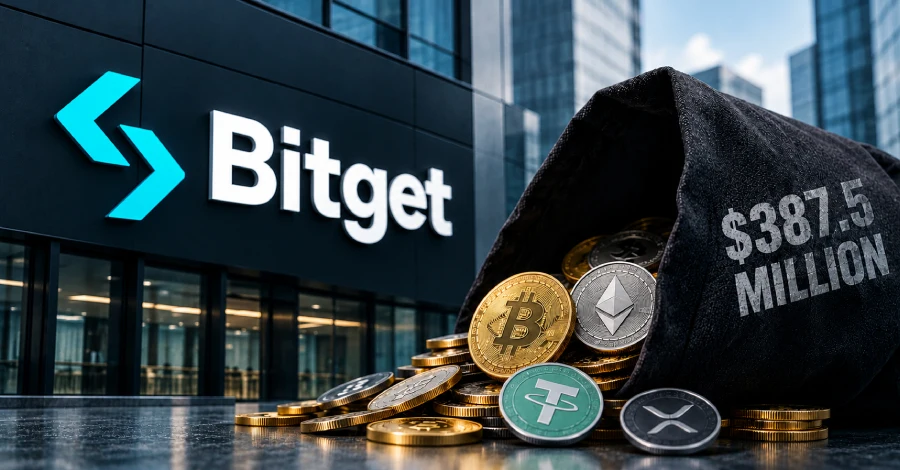
Cryptocurrency exchange Bitget on Wednesday confirmed that attackers who stole $387.5 million last week exploited a zero-day flaw in third-party security products, citing ongoing investigation findings from SlowMist.
«Their investigation identified malicious activity involving third-party security products, including a zero-day vulnerability, and recovered a customized tool used by the attacker to initiate unauthorized withdrawals,» Bitget said in a post on X.
On September 24, 2026, the cryptocurrency exchange disclosed that threat actors stole $387.5 million from its hot and warm wallets through a series of unauthorized transfers, prompting it to halt all withdrawals temporarily. Close to $632,700 in cryptocurrency assets have been frozen by Circle, Tether, and NEAR Intents.
In a subsequent analysis, Bitget said the attackers exploited the flaw to obtain high-level internal credentials and use them to issue fraudulent withdrawal commands to the wallet system and initiate «abnormal transfers that bypassed existing risk controls.» Bitget has since notified the relevant third-party vendor and disabled the affected functionality pending completion of a fix.

The incident impacted 11 blockchains, including Ethereum, XRP Ledger, Zcash, TRON, Arbitrum, Optimism, Base, BNB Smart Chain, Avalanche, Algorand, and Celestia. Affected assets identified to date include XRP, ETH, USDT, ZEC, ATOM, USDC, USD0, XAUt, BNB, AVAX, TRX, ALGO, and TIA.
According to a new progress report published by SlowMist, the earliest malicious activity linked to the hack dates back to August 31, 2026.
«A service running on one of Product A’s nodes was affected by a zero-day vulnerability,» the company said. «The attacker ran a hidden script under the service process, launched a command to read the environment variable containing the database password, and connected to the database.»

«Similar hidden-script activity was observed on two other nodes on September 23 and September 25. These findings show that the affected service environments had already been compromised before the assets were transferred out.»
Then, on September 25, 2026, the threat actor is said to have accessed another product’s (named Product B) management platform by using an internal employee’s identity and making three consecutive attempts to inject system commands into the product’s task parameters to write malicious files.
«The attacker subsequently submitted code through the platform’s web execution endpoint, attempting to modify server configuration, write a communication relay file, and upload and assemble malicious program files in batches,» the blockchain security company added.
Another key finding relates to the threat actor’s use of a bespoke tool to siphon the assets. SlowMist said the program was among the deleted files it had recovered. Highly tailored to the wallet system’s withdrawal logic, the tool began running and executing cryptocurrency theft at 01:49 a.m on September 25, 2026.

Google-owned Mandiant’s probe into the incident has found that the attackers gained unauthorized access to certain third-party security appliances (i.e., A and B), and then leveraged that access to move laterally into Bitget’s wallet environment.
«The threat actor deployed a web shell onto the security appliance B and established a Command-and-Control (C2) connection,» Mandiant said. «Using the persistent access on security appliance B, the threat actor moved laterally to Bitget’s production wallet job server and deployed malicious packages.»
«The threat actor compromised network and security appliances and leveraged them to distribute malicious packages and gain control over the wallet job server.»
Bitget said IP behavior patterns and on-chain analysis indicate the attack was carried out by North Korean threat actors, with Elliptic and TRM Labs uncovering wallet overlaps used to launder illicit proceeds obtained from previous hacks.