
 admin
admin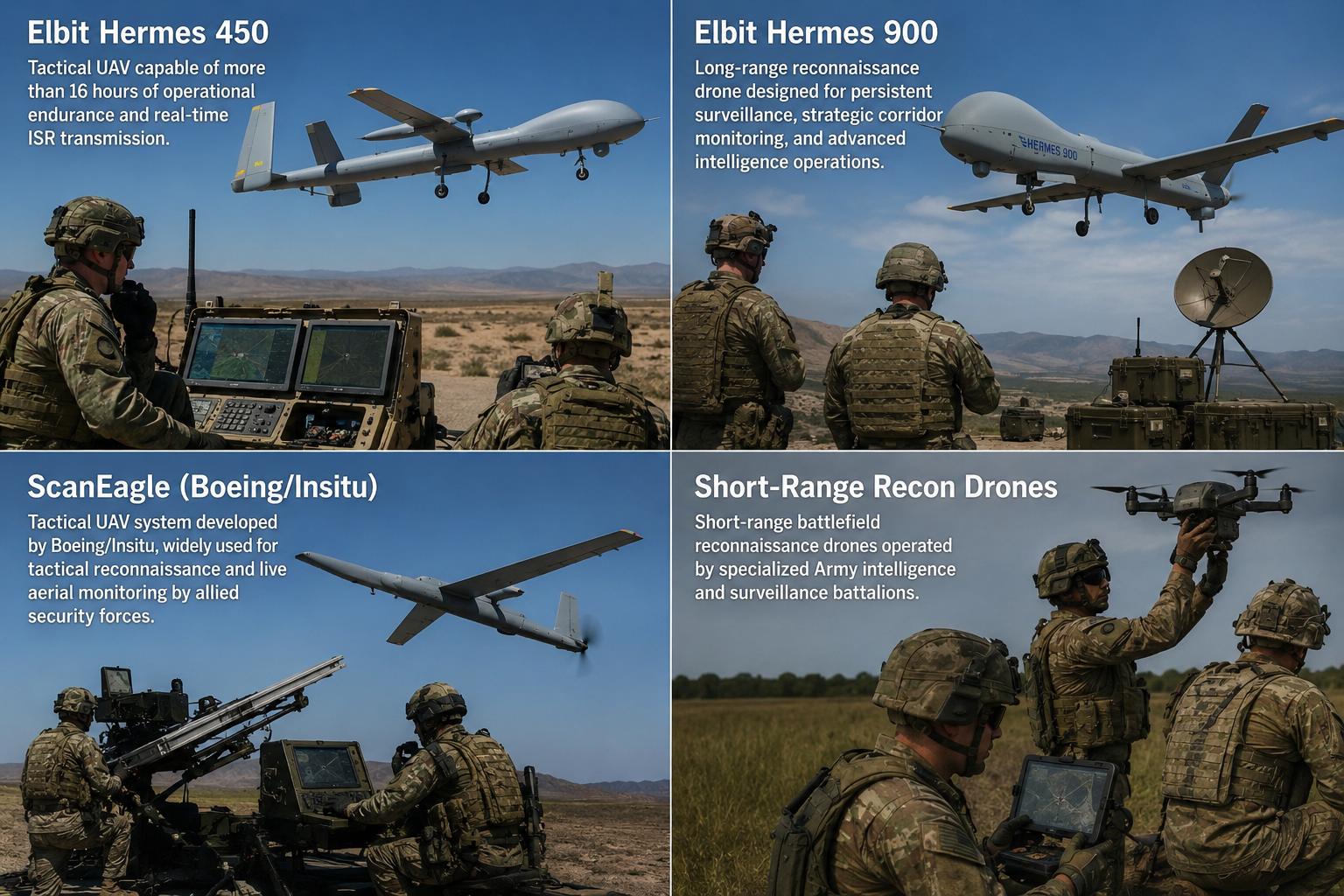
SANTIAGO DE CALI — As Colombia approaches one of the most sensitive election days in recent history, authorities have activated an unprecedented security architecture across the country’s southwest region, combining military intelligence, advanced aerial surveillance, real-time monitoring systems, and coordinated technological operations designed to protect the democratic process on May 31.
According to security sources consulted by The Digital Fortress, the departments of Valle del Cauca, Cauca, and Nariño will operate under a persistent ISR (Intelligence, Surveillance and Reconnaissance) framework supported by unmanned aerial systems, encrypted communications, and interconnected command centers capable of reacting within seconds to any threat against constitutional order or electoral stability.
he Invisible Shield: Military Drones and Persistent Surveillance
The backbone of the operation will be airborne.
The Colombian Aerospace Force (FAC) and the Colombian National Army are expected to deploy tactical surveillance platforms commonly used in counterterrorism, border monitoring, and high-risk intelligence missions.
Among the systems integrated into the security architecture are:
- Elbit Hermes 450 tactical UAVs, capable of more than 16 hours of operational endurance and real-time ISR transmission.
- Elbit Hermes 900 long-range reconnaissance drones designed for persistent surveillance, strategic corridor monitoring, and advanced intelligence operations.
- ScanEagle systems, developed by Boeing/Insitu in the United States, widely used for tactical reconnaissance and live aerial monitoring by allied security forces.
- Short-range battlefield reconnaissance drones operated by specialized Army intelligence and surveillance battalions.
Military sources indicate these platforms will provide georeferenced imagery, suspicious movement tracking, behavioral pattern analysis, and persistent monitoring of areas considered operationally sensitive during the elections.
Real-Time Command and Control Infrastructure
All intelligence and aerial feeds will be centralized through two high-capacity Unified Command Posts (PMUs):
- Emergency and Security Management Center in Buga.
- Metropolitan Police Command Headquarters in Cali.
Both facilities will operate through secure communication networks, live intelligence fusion, and tactical coordination systems designed to process operational alerts and situational analysis in real time.
Security analysts describe the deployment as one of the most technologically sophisticated electoral protection frameworks implemented in Colombia in recent years, integrating aerial surveillance, predictive intelligence, rapid response units, and digital monitoring capabilities.
High-Risk Municipalities Under Reinforced Security
Following a joint risk assessment conducted by electoral authorities and security agencies, more than 148 municipalities were classified as priority zones due to historical public order challenges, criminal economies, and the presence of armed groups.
Valle del Cauca
- Buenaventura
- Jamundí
- Palmira
- Buga
- Tuluá
Cauca
- Argelia
- Santander de Quilichao
- Toribío
- Caloto
- Balboa
Nariño
- Tumaco
- Barbacoas
- Roberto Payán
- Magüí Payán
- Ricaurte
These areas will remain under reinforced aerial surveillance, layered security perimeters, and rapid tactical response protocols aimed at preventing any disruption to the democratic process.
A Technology-Driven Electoral Security Operation
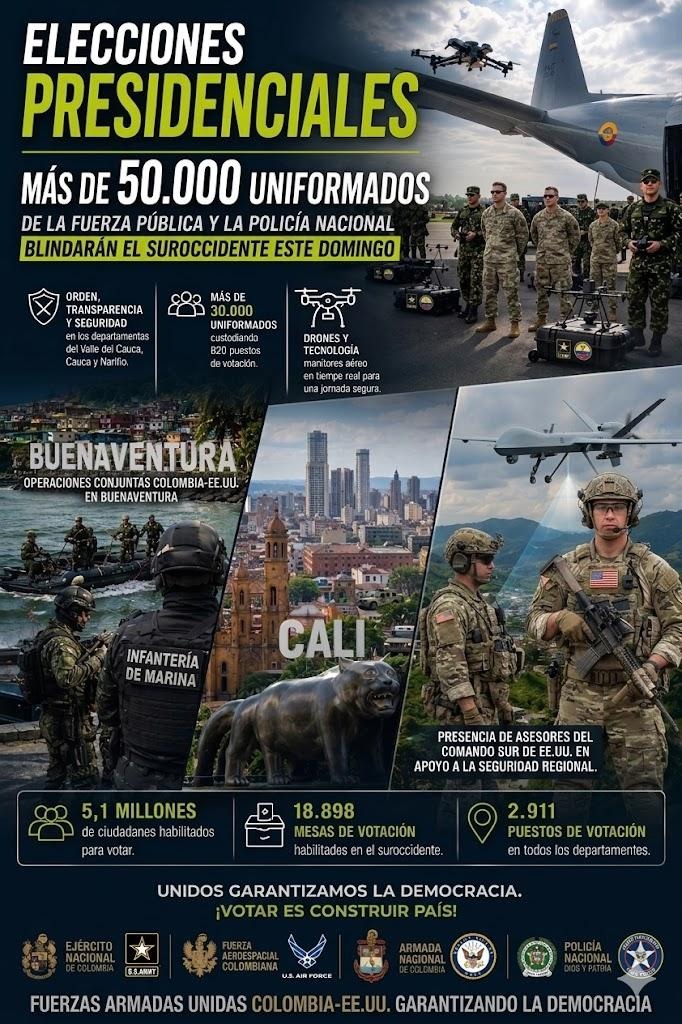
Authorities confirmed that more than 50,000 security personnel will be exclusively dedicated to protecting the electoral process across southwest Colombia.
Key Figures
- More than 50,000 military and police personnel deployed.
- 2,911 polling stations under permanent protection.
- 18,898 voting tables enabled.
- 5.1 million eligible voters across the region.
- Operational coverage throughout Valle del Cauca, Cauca, and Nariño.
As Colombia moves toward a decisive political moment, the government is relying on a combination of territorial control, advanced surveillance technology, and integrated intelligence systems to ensure that every citizen can vote under conditions of security, stability, and institutional protection.